

NGC 346, Metal Print
NGC 346, Metal Print
Couldn't load pickup availability
Bring the Universe Home: High-Quality Metal Prints
Transform your space with stunning cosmic wonders. These high-quality metal prints showcase the universe's vibrant colors and intricate details in a way that has never been seen before.
Lasting Visions of the Cosmos:
Scratch- and Fade-Resistant: Crafted with a durable aluminum surface, these prints withstand everyday wear and tear.
Exceptional Vibrancy: The meticulous printing process utilizes the metal's reflective properties to create stunningly vivid colors that bring the cosmos to life.
Easy to Care For: Simply wipe clean with a damp cloth, making them ideal for high-traffic areas.
Multiple Sizes Available: Find the perfect fit for your space, whether you're seeking a captivating focal point or a mesmerizing gallery wall.
Modern Elegance:
These metal prints have a sleek, contemporary look that adds a touch of sophistication. The artwork appears almost luminescent against the wall, adding a unique dimension to your décor.
About this image
About this image
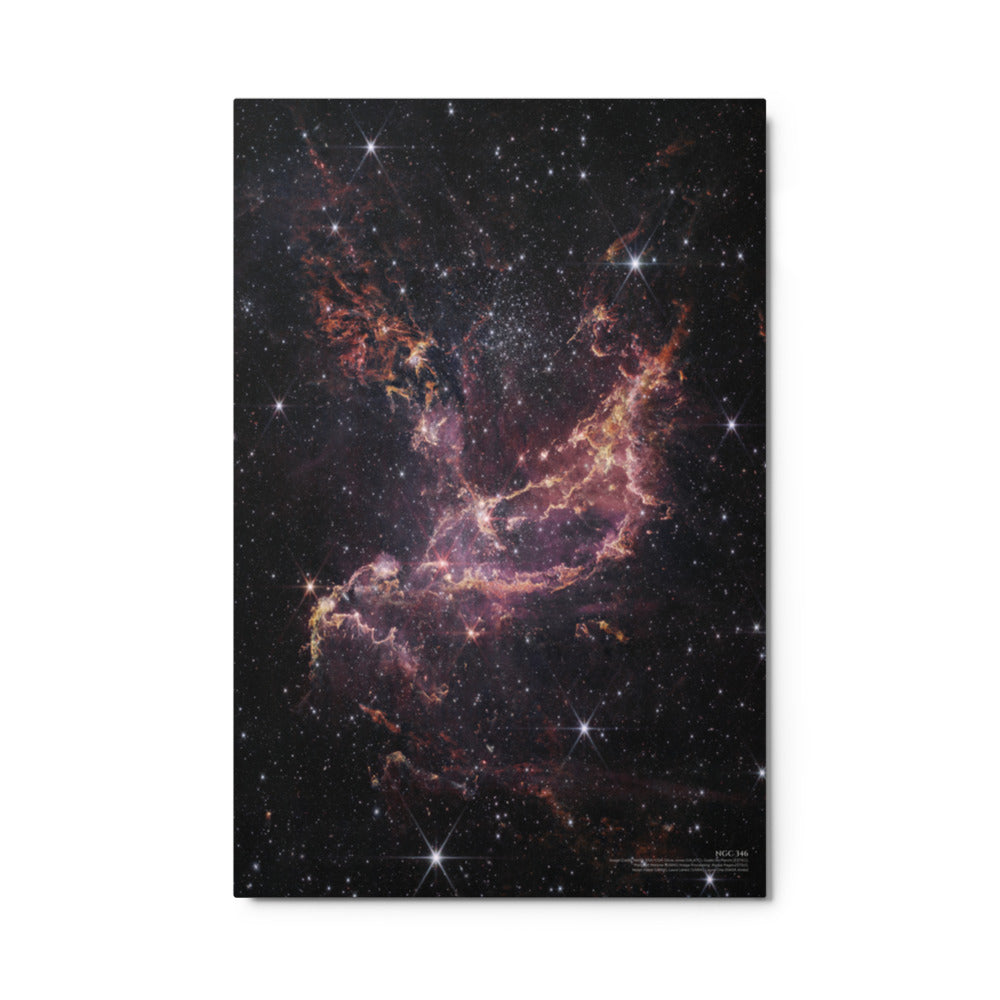
NGC 346, shown here in this image from NASA’s James Webb Space Telescope Near-Infrared Camera (NIRCam), is a dynamic star cluster that lies within a nebula 200,000 light-years away. Webb reveals the presence of many more building blocks than previously expected, not only for stars, but also planets, in the form of clouds packed with dust and hydrogen.
The plumes and arcs of gas in this image contains two types of hydrogen. The pink gas represents energized hydrogen, which is typically as hot as around 10,000 °C (approximately 18,000 °F) or more, while the more orange gas represents dense, molecular hydrogen, which is much colder at around -200 °C (approximately -300 °F) or less, and associated dust.
The colder gas provides an excellent environment for stars to form, and, as they do, they change the environment around them. The effect of this is seen in the various ridges throughout, which are created as the light of these young stars breaks down the dense clouds. The many pillars of glowing gas show the effects of this stellar erosion throughout the region.
Constellation Tucana
Distance 200,000 light-years away (61,300 parsecs)
Dimensions This image is about 3.9 arcminutes across (240 light-years).
Exposure Dates: 16 June 2022, 26 June 2022, 10 Oct 2022
Size and materials
Size and materials
Format: Metal Print
Size: 8″×10″, 16″×20″, 24″×36″
Shipping and returns
Shipping and returns
Image credit
Image credit
NASA, ESA, CSA, Olivia Jones (UK ATC), Guido De Marchi (ESTEC), Margaret Meixner (USRA); Image Processing: Alyssa Pagan (STScI), Nolan Habel (USRA), Laura Lenkić (USRA), Laurie Chu (NASA Ames)


Same image, other formats
-
NGC 346, Canvas Wall Art
Regular price From $32.99 USDRegular priceUnit price per -
NGC 346, Jigsaw Puzzle
Regular price $44.99 USDRegular priceUnit price per -
NGC 346, Kids' Puzzle
Regular price $21.99 USDRegular priceUnit price per


